Operating practice ·
An Unattended Bag Is Beside the Keypad. Do Not Move It to Open the Lane.
The first management decision is not what the item is. It is whether anyone should approach it, who needs to move, and who has authority to clear the scene.
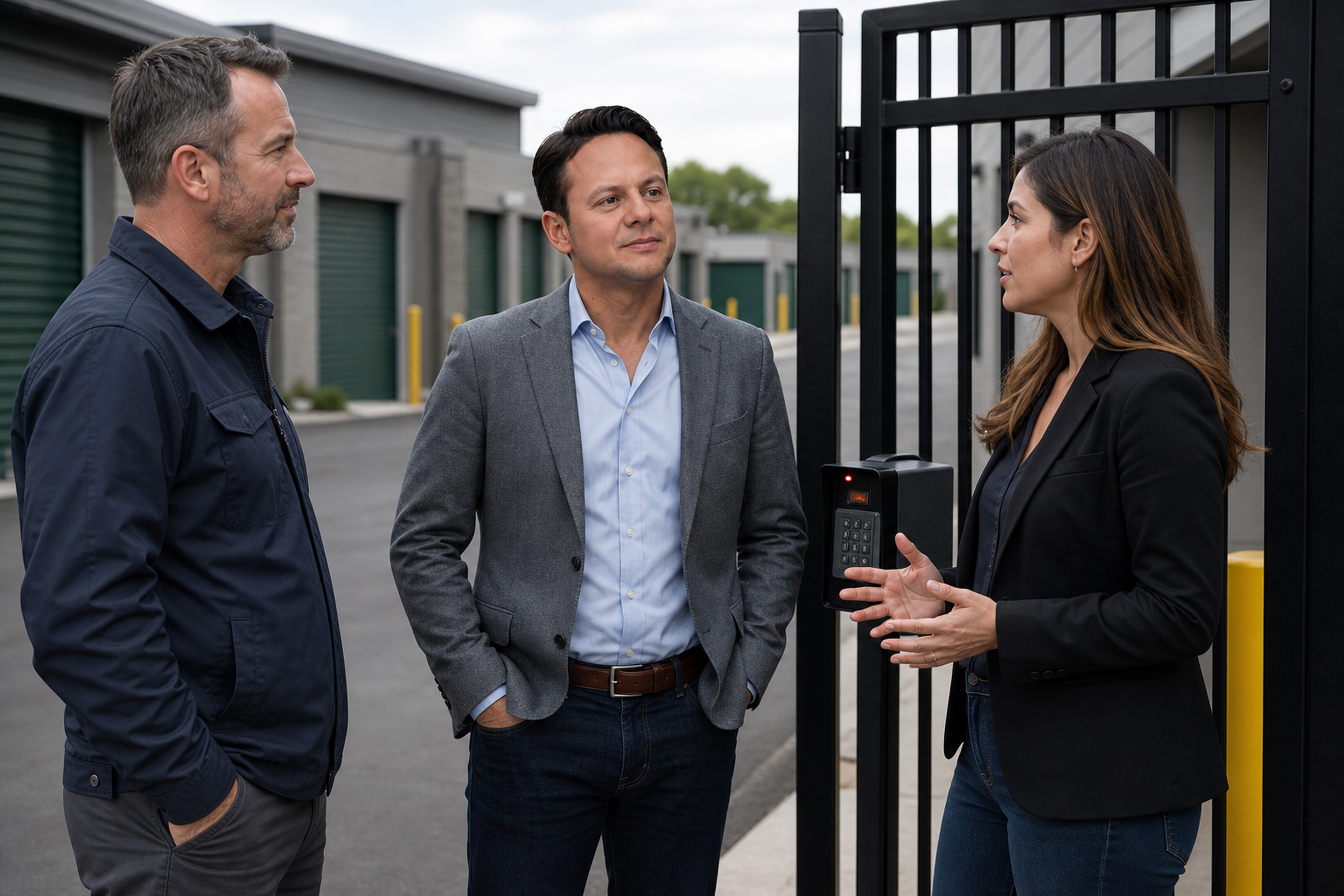
A customer arrives before opening and reports a backpack beside the inbound keypad. The drive aisle is narrow. Moving the bag three feet would reopen the lane.
That is exactly the wrong first move.
The manager does not need to identify the contents, guess the owner or decide whether the item is dangerous. The manager needs to stop people from making the situation worse, follow the facility's emergency plan, report observable facts and preserve a clean handoff to public-safety personnel.
This is a practical operating problem because self-storage properties are built around movement. Customers expect the gate to open. Vendors arrive on schedules. A blocked entrance creates pressure to act. But restoring traffic is not the first priority when an unknown item may require a public-safety response.
The operating boundary is simple: do not touch, tamper with or move an unknown item to restore access.
Unattended does not automatically mean suspicious
The distinction matters. The Cybersecurity and Infrastructure Security Agency's Bomb Threat Guide says not every unattended item is suspicious. Its guidance points to context such as a threat, the item's placement or proximity, and observable indicators. CISA's Suspicious or Unattended? poster gives employees a concise screen: Is the item hidden? Is it obviously suspicious? Is it not typical for the area?
Those questions are an observation aid, not permission to conduct an inspection. A facility manager should not lean over the item, open it, shake it, photograph it from close range or ask a customer to check it. The manager can describe what is visible from a safe position and report why the placement or surrounding circumstances raised concern.
If there is a specific threat, visible suspicious indicator, unusual placement or uncertainty that cannot be resolved safely under the facility's plan, treat the matter as a safety escalation. The cost of pausing a lane is lower than the cost of improvising around a possible hazard.
First, stop the approach
When the report arrives, the first operating action is to prevent additional exposure.
Tell the reporting person not to touch the item. Stop staff, customers and vendors from walking or driving toward it. Use the safest known route to move people away from the area. Do not direct someone past the item simply because that is the usual exit.
This is where a prepared facility beats a clever manager. The emergency plan should identify who can activate the response, where people assemble, how alternate access works and who accounts for employees. The Occupational Safety and Health Administration's emergency-action-plan standard includes procedures for reporting emergencies, evacuation, employee accounting and responsible contacts when the standard applies. OSHA also recommends emergency action plans broadly because organized actions reduce confusion during emergencies.
The manager should work from that plan and local authority instructions, not invent a distance or a technical response at the gate. Conditions vary. The safe route, perimeter and emergency-service response are decisions for the plan and the responsible authorities.
Report observations, not theories
Once people are moving away from the area, the manager needs a concise report. Good reporting separates what someone observed from what someone inferred.
Capture:
- what the item looks like without approaching it;
- exactly where it is in relation to a fixed feature, such as the inbound keypad;
- when it was first observed and by whom;
- whether anyone saw it placed or saw a person or vehicle leave;
- whether there was a threat, note, sound, odor, leakage or other visible or reported condition;
- what area has been cleared and which route people are using; and
- who has been notified and who now owns the response.
Do not write “device” when the observed fact is “black backpack.” Do not describe an owner, motive or contents that nobody saw. Precision helps responders; speculation creates noise.
For an emergency, call 911. The Department of Homeland Security's incident-reporting guidance directs people to local authorities and 911 for emergencies. Follow the facility's plan and the instructions of the responding agency. The person making the call should be prepared to stay available from a safe location and brief responders without returning to the item.
Preserve the handoff without creating a second incident
The manager still owns facility operations, but not the public-safety scene.
Assign one operator contact. That person maintains the time line, records instructions, identifies known camera locations or gate records, and prevents a well-meaning employee from reopening the lane. If video or system records can be preserved from a safe location and the response plan permits it, note their location and time range. Do not approach the item to improve a camera view, retrieve a device or collect evidence.
The handoff should answer four questions:
- What was observed?
- What actions have already been taken?
- Where are customers, staff and vendors now?
- What operating systems or records could help after responders establish control?
That is enough. A storage manager does not need to become a hazardous-device expert. The facility contribution is disciplined control of people, information and operating consequences.
The gate problem continues after responders arrive
Emergency personnel may take control of the scene, but the property still has customer and operating obligations.
Someone must handle arriving customers without sending them toward the restricted area. Someone must pause vendors. Someone must account for employees and document any customer access that cannot occur. If an alternate gate or pedestrian route exists, it should only be used when it is outside the restricted area and consistent with authority instructions. Convenience cannot overrule the boundary.
The customer message should be short and truthful: access is temporarily restricted due to a safety response; do not enter the restricted area; follow the stated route or wait for the next update. Do not disclose an unverified threat, identify a suspected person or promise a reopening time.
This is customer service at its most basic. Customers do not need drama. They need calm direction, consistent boundaries and an accurate update when the facts change.
Responder release is necessary, but it is not the whole reopening test
The lane should not reopen because the item is gone, the first responder leaves or traffic begins to stack up.
Require an identifiable release from the responsible authority under the facility's plan. Record who gave it, when it was given, and whether any restriction remains. Then complete an operator readback before normal access resumes:
- Is the entrance physically clear?
- Are any responder boundaries or instructions still active?
- Are the gate, keypad, lighting and traffic path visibly ready for normal use?
- Have staff and customers received one consistent route instruction?
- Has the manager recorded unresolved damage, system issues or evidence requests?
- Who owns the next update and final event closure?
Responder release answers whether the public-safety restriction has ended. The operator readback answers whether the facility can safely and reliably resume its own service. Both matter.
A fictional shift example
The following scenario is fictional and is not a customer, deployment or reported incident.
At fictional Mariner Row Storage, a customer calls from the driveway at 6:42 a.m. to report a backpack beside the inbound keypad. The opening manager remains at the office-side assembly point, tells the customer not to approach, blocks additional arrivals from using the inbound lane and activates the facility emergency plan. From the safe position, the manager records the item's visible description, exact location, discovery time and the customer's observations.
The manager contacts emergency services, names one operator contact and notes the relevant gate-camera time range without approaching the item. Arriving customers receive a neutral access-restriction message. No employee tries to relocate the bag or determine its contents.
After the responding authority gives an identifiable release, the manager records the release and completes the operator readback. The keypad and lane are checked from the now-released area, remaining instructions are communicated, and one manager authorizes reopening. The incident record closes later, after outstanding evidence or maintenance requests have owners.
The strength of this response is not a dramatic discovery. It is the absence of improvisation.
Put the boundary on one card
The companion Unattended Item Boundary and Emergency Handoff Card converts this article into a shift tool. It includes the observation record, people-and-route boundary, notification log, responder handoff, prohibited actions and two-part reopening test.
Train with it before an incident. Walk the property and identify fixed location references, alternate assembly points, customer-message ownership and the person authorized to reopen. Review the card with opening staff, relief managers and anyone who might be alone at the facility.
An unattended bag near a keypad creates pressure because it interrupts the business in a visible way. Good operations resist that pressure. Do not move the item to open the lane. Move people away, report what is known, hand the scene to the proper authority and reopen only when both the responder and the operator have completed their part.
Unattended Item Boundary and Emergency Handoff Card
Use this card with the facility emergency plan and local authority instructions. It does not replace emergency services, law enforcement direction, site-specific training or legal requirements.
Immediate boundary
- Do not touch, tamper with or move the item. Do not ask another person to inspect it.
- Stop the approach. Move staff, customers and vendors away using the safest known route. Do not route people past the item.
- Activate the facility emergency plan. For an emergency, call 911. Follow responding-authority instructions.
- Name one operator contact. This person maintains the log and briefs responders from a safe position.
Observation record
| Field | Record facts only |
|---|---|
| Event ID / facility | |
| Discovery time / observer | |
| Exact location using fixed landmarks | |
| Visible item description from the safe position | |
| Threat or suspicious context reported | |
| Person or vehicle observations | |
| Changes observed without approaching | |
| Photos or video already available from a safe system |
Do not infer contents, ownership, motive or risk level. Write “black backpack beside inbound keypad,” not “device” or “owner's bag,” unless the underlying fact is independently known and authorized for the record.
People and route boundary
| Control | Status / owner |
|---|---|
| Restricted area identified | |
| Staff accounted for | |
| Customers and vendors redirected | |
| Safe assembly point / alternate route | |
| Neutral customer update owner | |
| Next update time |
Notification and handoff
| Time | Person or authority | Instruction / reference | Next owner |
|---|---|---|---|
Responder briefing: what was observed; what has been done; where people are now; which facility records may be relevant. Do not approach the item to collect evidence or improve a camera view.
Prohibited actions confirmed
- [ ] No person touched, moved, opened, shook or closely inspected the item.
- [ ] No person was routed through the restricted area for convenience.
- [ ] No unverified threat, owner, motive, contents or reopening time was communicated.
- [ ] No employee reopened the area without the required release and operator authorization.
Two-part reopening test
1. Responsible-authority release
- Authority / responder name or reference:
- Release time:
- Remaining restriction or instruction:
2. Operator site readback
- [ ] Entrance and travel path visibly clear in the released area.
- [ ] Gate, keypad, lighting and traffic controls ready for normal operation.
- [ ] Staff and customer route instructions consistent.
- [ ] Damage, evidence, system or maintenance follow-ups assigned.
- [ ] Reopening authorized by:
- [ ] Closure owner and next review time recorded.
If release authority, remaining restrictions or site readiness are unclear, keep the affected area closed and escalate under the facility plan.